

Master-Planned Communities in Dubai
Why Master-Planned Communities Are Booming in Dubai
Dubai’s real estate market is evolving beyond individual buildings and standalone developments. Increasingly, buyers and investors are looking at the community as a whole – how people live, commute, shop, relax and access essential services. This shift is one reason master-planned communities in Dubai continue to attract attention in 2026.
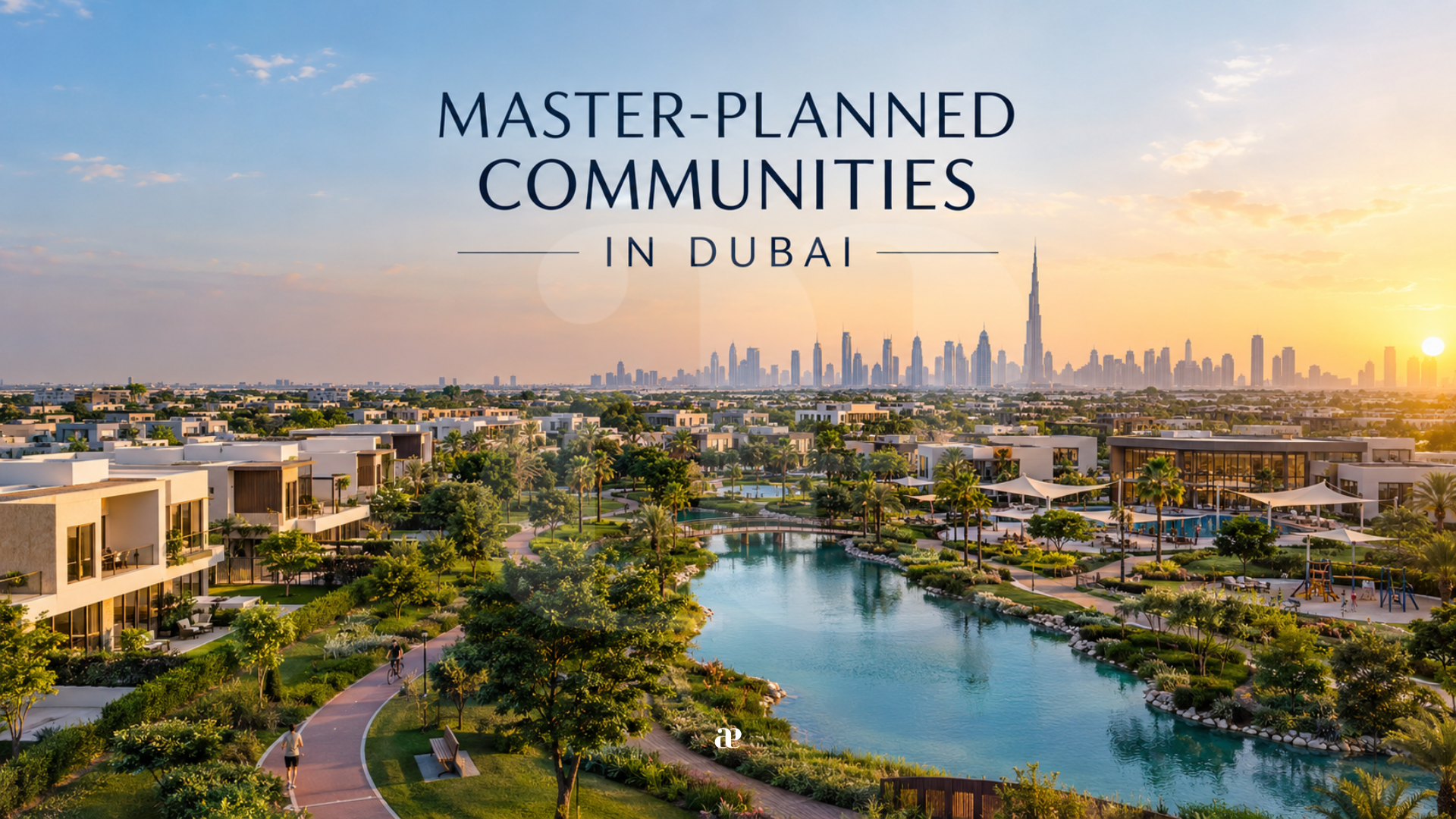
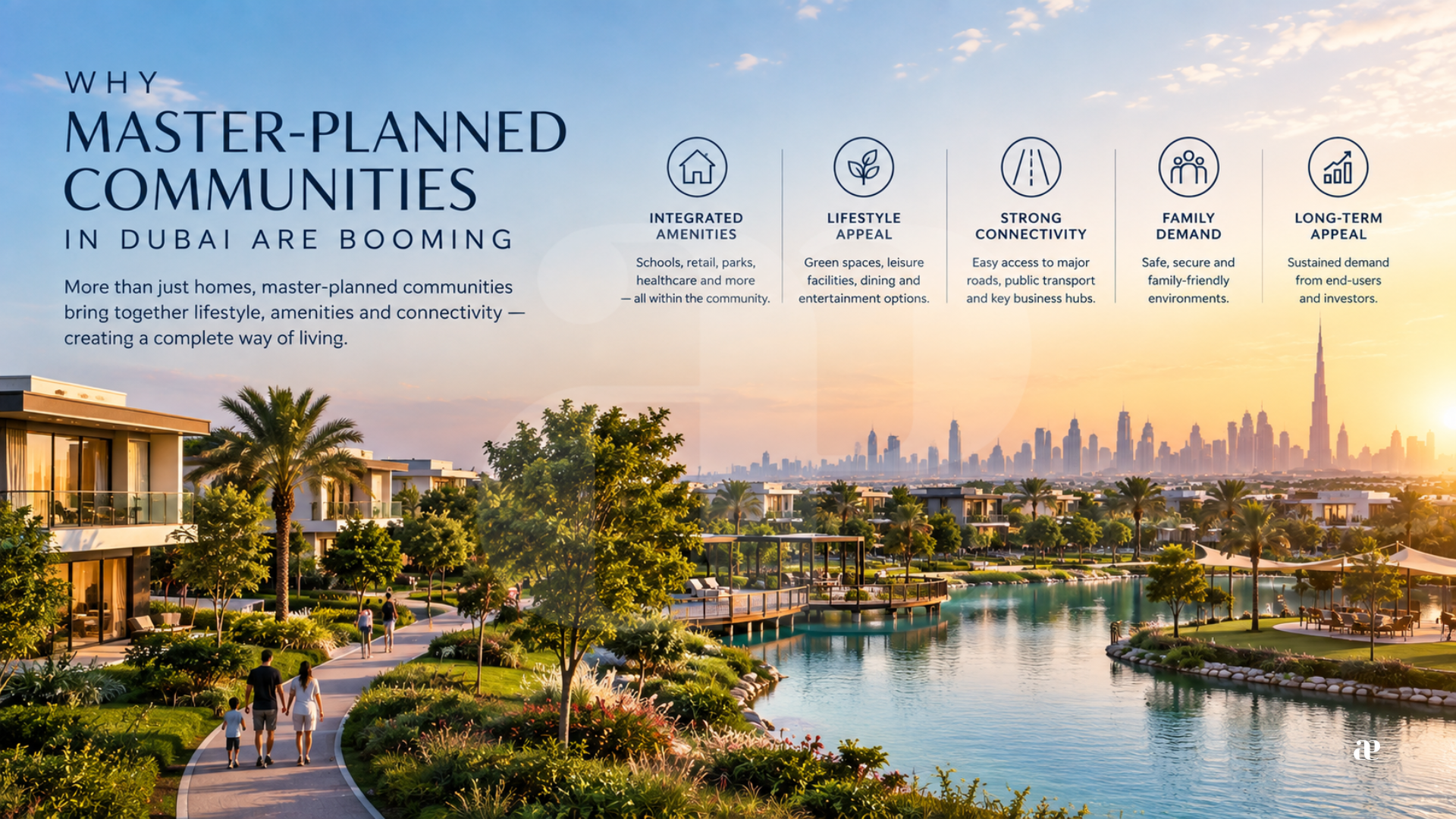
A master-planned community is designed around a broader vision rather than simply a collection of residential buildings. Homes are typically integrated with parks, retail, schools, leisure facilities, roads, public spaces and other amenities. As a result, residents can benefit from a more connected and convenient lifestyle.
What Makes Master-Planned Communities Different?
One of the biggest advantages of master-planned communities is the combination of residential and lifestyle infrastructure.
Instead of developing a building in isolation, large-scale communities are planned around the needs of residents. This can include villas, townhouses and apartments alongside landscaped areas, walking paths, community retail, schools, sports facilities and entertainment destinations.
For buyers, this creates a more complete living environment. Moreover, for investors, established community infrastructure can contribute to sustained tenant and buyer demand.
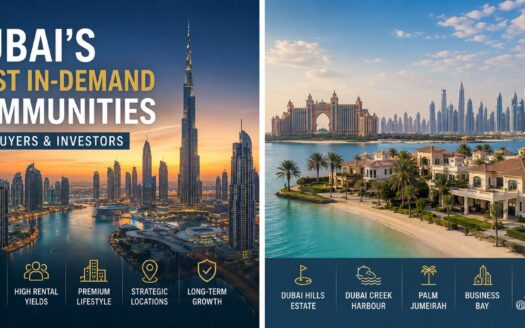
Dubai already has several examples where community planning has become a major part of the property’s appeal. Communities such as Dubai Hills Estate, Arabian Ranches, DAMAC Hills and Dubai Creek Harbour demonstrate how residential projects can be positioned around lifestyle, connectivity and amenities. Property Finder’s 2026 market research also highlights continued demand across established communities, including Dubai Hills Estate, JVC, Downtown Dubai, Dubai Marina and Palm Jumeirah.
Lifestyle Is Becoming a Bigger Buying Factor
Today, property decisions are increasingly about more than the size of a home or its purchase price.
For families, proximity to schools, parks, retail and leisure facilities can be particularly important. Similarly, younger professionals may prioritise restaurants, cafés, fitness facilities and convenient access to major employment hubs.
Consequently, master-planned communities can appeal to different demographic groups by offering multiple lifestyle components within the same development.
For example, Dubai Hills Estate combines residential properties with green spaces, retail and leisure facilities, while other communities focus more heavily on waterfront living, golf or family-oriented amenities.
This broader lifestyle proposition can also influence rental demand because tenants are often evaluating the neighbourhood as much as the individual property.
Connectivity Is Playing a Major Role
Another important factor is connectivity.
Dubai continues to invest in transport infrastructure and road improvements, which can change how attractive different communities become over time. Property Finder’s 2026 market outlook notes that road upgrades such as Hessa Street and improvements around the Umm Suqeim–Al Qudra corridor are expected to support connectivity for several communities. The upcoming Dubai Metro Blue Line is also expected to influence areas along its planned corridor when it becomes operational from 2029 onwards.
Therefore, when evaluating master-planned communities in Dubai, buyers should consider not only today’s accessibility but also planned infrastructure.
For broader context on Dubai’s long-term urban development, see the Dubai 2040 Urban Master Plan.
Demand Is Moving Towards Complete Communities
Dubai’s residential market remains active in 2026, although the pace of growth has started to moderate compared with the rapid expansion of previous years. CBRE reported more than 45,000 residential transactions worth approximately AED 137 billion in Q1 2026, while also noting that price and rental growth were moderating and additional supply was expected later in the year.
This makes the quality of a community increasingly relevant.
As supply expands, buyers have more options. Therefore, developers and communities need to offer something beyond a new building. Location, infrastructure, amenities, accessibility and the overall living experience can become important differentiators.
Property Finder’s 2026 analysis similarly points to lifestyle, connectivity, schools, healthcare and retail as important considerations when evaluating Dubai’s residential communities.
Why This Matters for Investors
For investors, a master-planned community can provide a broader demand base because the development may attract different types of residents.
For instance, a community with apartments, townhouses and villas can appeal to singles, couples and families at different stages of life. Furthermore, established amenities and infrastructure may support rental appeal once the community matures.
However, not every master-planned community will perform in the same way. Supply levels, developer quality, location, property type, service charges, rental demand and resale liquidity all need to be assessed individually.
This is particularly important in 2026 because Dubai’s market is becoming more segmented. CBRE’s latest UAE market review notes that Dubai’s residential market moderated in Q2 as demand softened, transaction activity declined and new supply eased some pricing pressures.
Therefore, the community name alone should never be the deciding factor.
The Future of Dubai Real Estate Is Increasingly Community-Focused
Dubai’s transformation into a multi-centre global city is creating demand for residential environments that offer more than a place to live.
Master-planned communities in Dubai bring together homes, infrastructure, amenities, connectivity and lifestyle into a single ecosystem. As the city continues to expand, these characteristics are likely to remain important considerations for both end users and investors.
Ultimately, the right community depends on the buyer’s objectives. A family looking for a long-term home may prioritise schools and green spaces, while an investor may focus more heavily on rental demand, entry price and resale liquidity.
That is why understanding the area – not just the property – is becoming increasingly important in Dubai real estate.

Pingback:Top Emerging Communities in Dubai with Growth Potential - Area Experts Real Estate