
Dubai Metro Gold Line: Communities to Watch for Growth
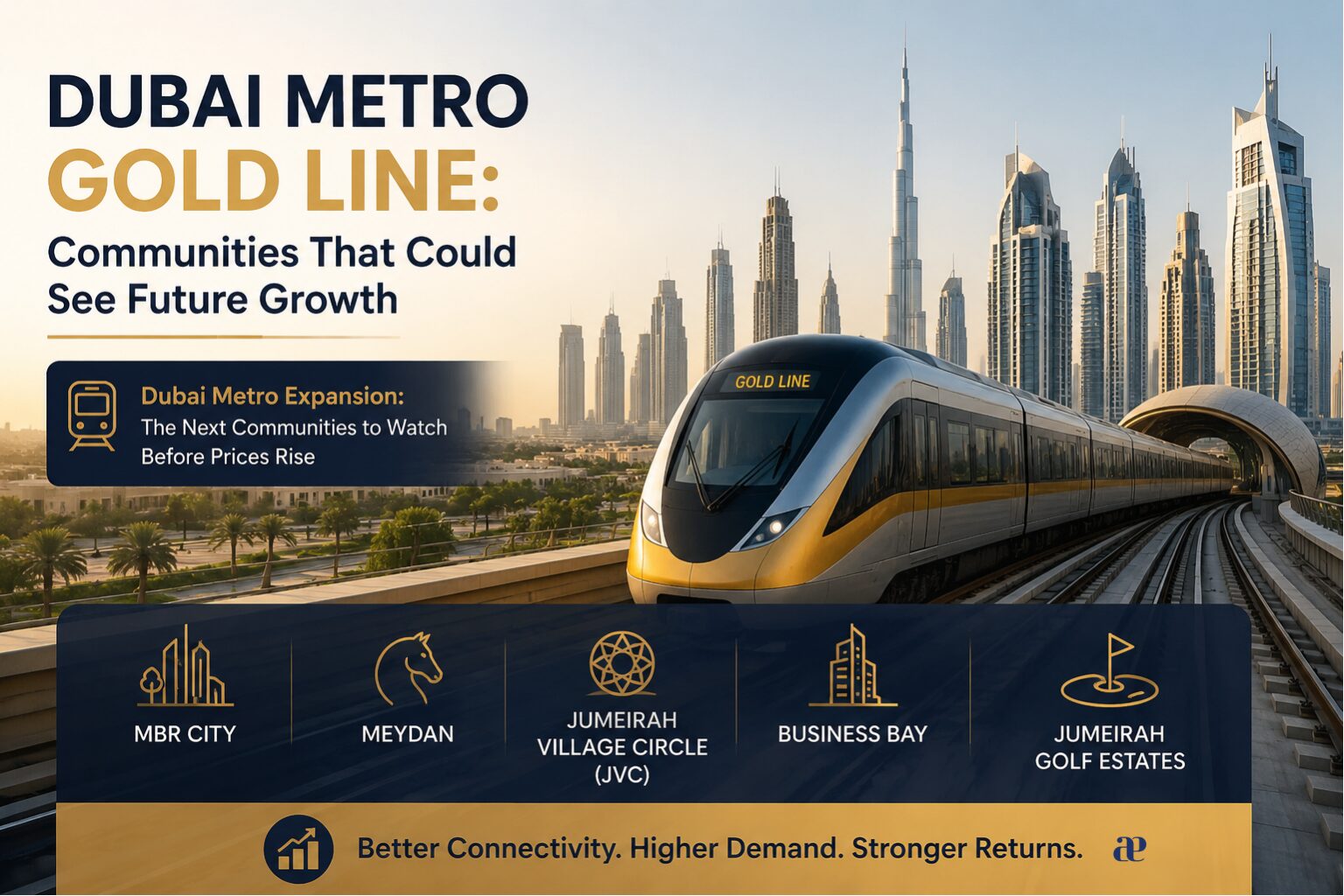
Dubai Metro Expansion: The Next Communities to Watch Before Prices Rise
Dubai’s real estate market has long been influenced by infrastructure development, with transport projects often acting as catalysts for property value growth. As discussions around the proposed Dubai Metro Gold Line continue to attract attention, investors and homebuyers are already evaluating which communities could benefit the most from improved connectivity and accessibility.
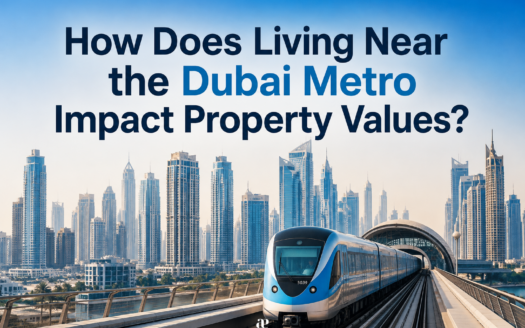
Historically, areas connected to the Dubai Metro have experienced increased demand from both residents and investors. Easy access to public transportation enhances convenience, reduces commuting times, and attracts a wider pool of tenants and buyers. As Dubai continues its expansion, new metro routes have the potential to reshape demand patterns and create fresh investment opportunities across the city.
Why Metro Connectivity Matters
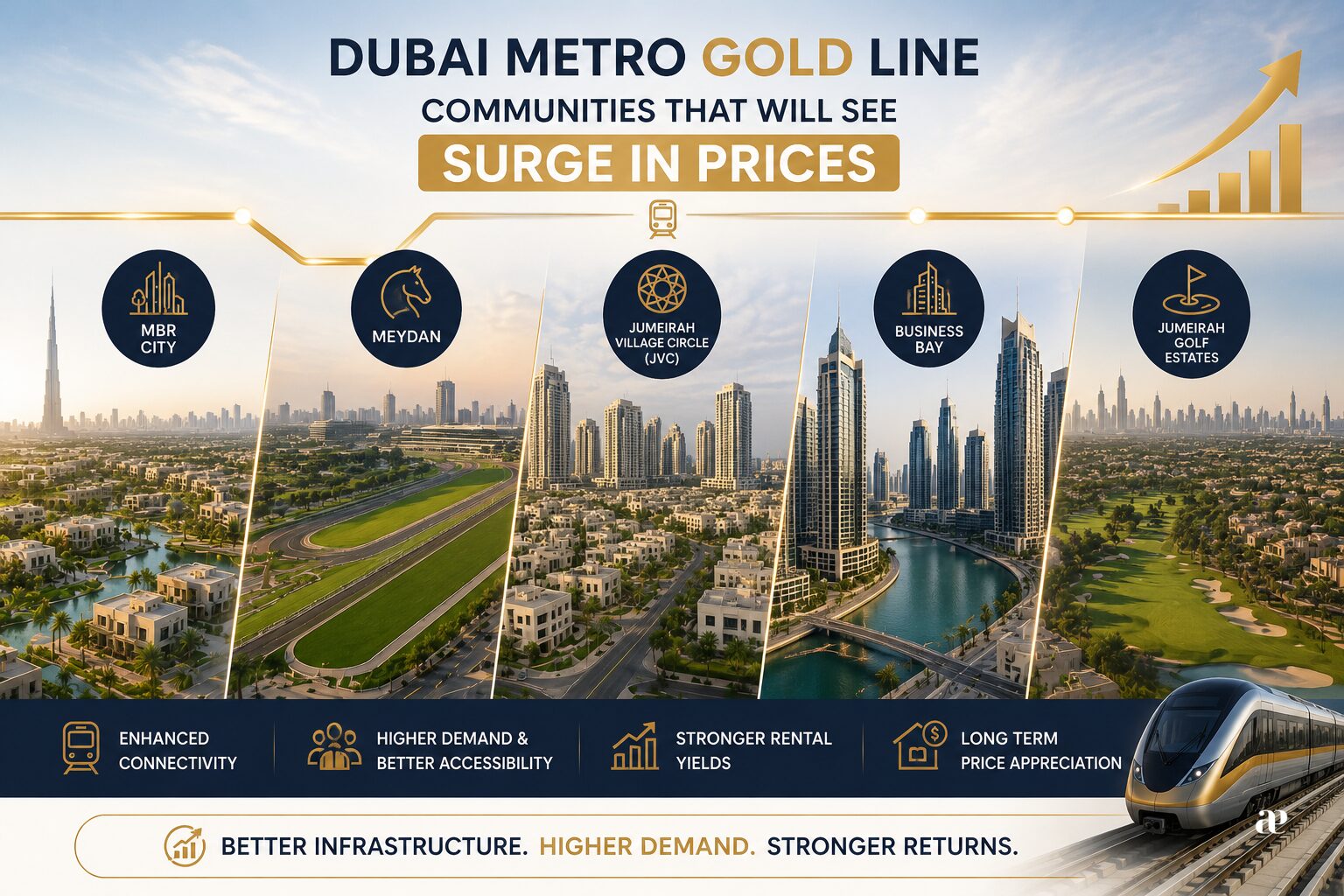
Infrastructure remains one of the strongest drivers of long-term property appreciation. Improved transportation networks make communities more accessible, support population growth, and encourage commercial activity. For property investors, this often translates into higher rental demand, stronger occupancy rates, and increased property values over time.
The anticipated Dubai Metro Gold Line could enhance connectivity between key residential and commercial districts, making several communities particularly attractive for future growth.
MBR City
Mohammed Bin Rashid City (MBR City) has rapidly emerged as one of Dubai’s premier residential destinations. Known for its luxury developments, green spaces, and proximity to Downtown Dubai, the area already enjoys strong investor interest. Improved metro access could further increase its appeal by making daily commuting easier for residents while supporting future development plans across the district.
Meydan
Meydan continues to evolve into a major mixed-use destination offering residential, commercial, and leisure developments. Its strategic location close to central Dubai positions it well for future growth. Enhanced transportation links could strengthen demand from professionals seeking convenient access to business hubs while enjoying a more spacious lifestyle environment.
Jumeirah Village Circle (JVC)
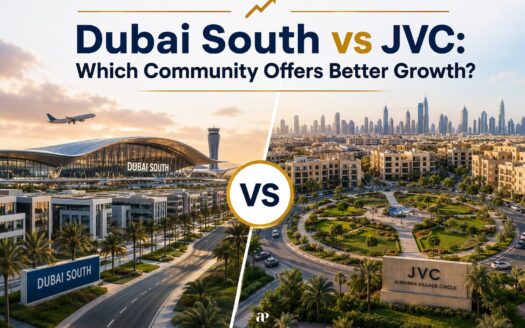
JVC remains one of Dubai’s most active residential communities, attracting both investors and end-users due to its affordability, family-friendly atmosphere, and attractive rental yields. Better metro connectivity could significantly enhance accessibility, potentially increasing demand from tenants who prioritize convenient transportation options and reducing reliance on private vehicles.
Business Bay
As one of Dubai’s leading commercial and residential districts, Business Bay already benefits from strong connectivity and continuous demand. Additional metro infrastructure could further support business activity and improve accessibility for residents and professionals, helping sustain long-term growth and strengthening its position as a key investment hotspot.
Jumeirah Golf Estates
Jumeirah Golf Estates has become increasingly popular among buyers seeking premium villas, townhouses, and a lifestyle-focused environment. Enhanced metro access could make the community even more attractive by improving connections to major employment centers and leisure destinations across Dubai.
Infrastructure and Property Appreciation
The relationship between infrastructure development and property value growth is well established. Major transportation projects often increase an area’s desirability by improving convenience, supporting economic activity, and encouraging new residential and commercial developments.
While property appreciation depends on multiple factors, communities that benefit from enhanced connectivity are often among the first to attract increased buyer interest. For investors looking at long-term opportunities, monitoring infrastructure projects such as the Dubai Metro Gold Line can provide valuable insights into future growth potential.
As Dubai continues investing in world-class transportation networks, communities positioned along future metro routes may present attractive opportunities before demand and prices fully reflect the benefits of improved accessibility.